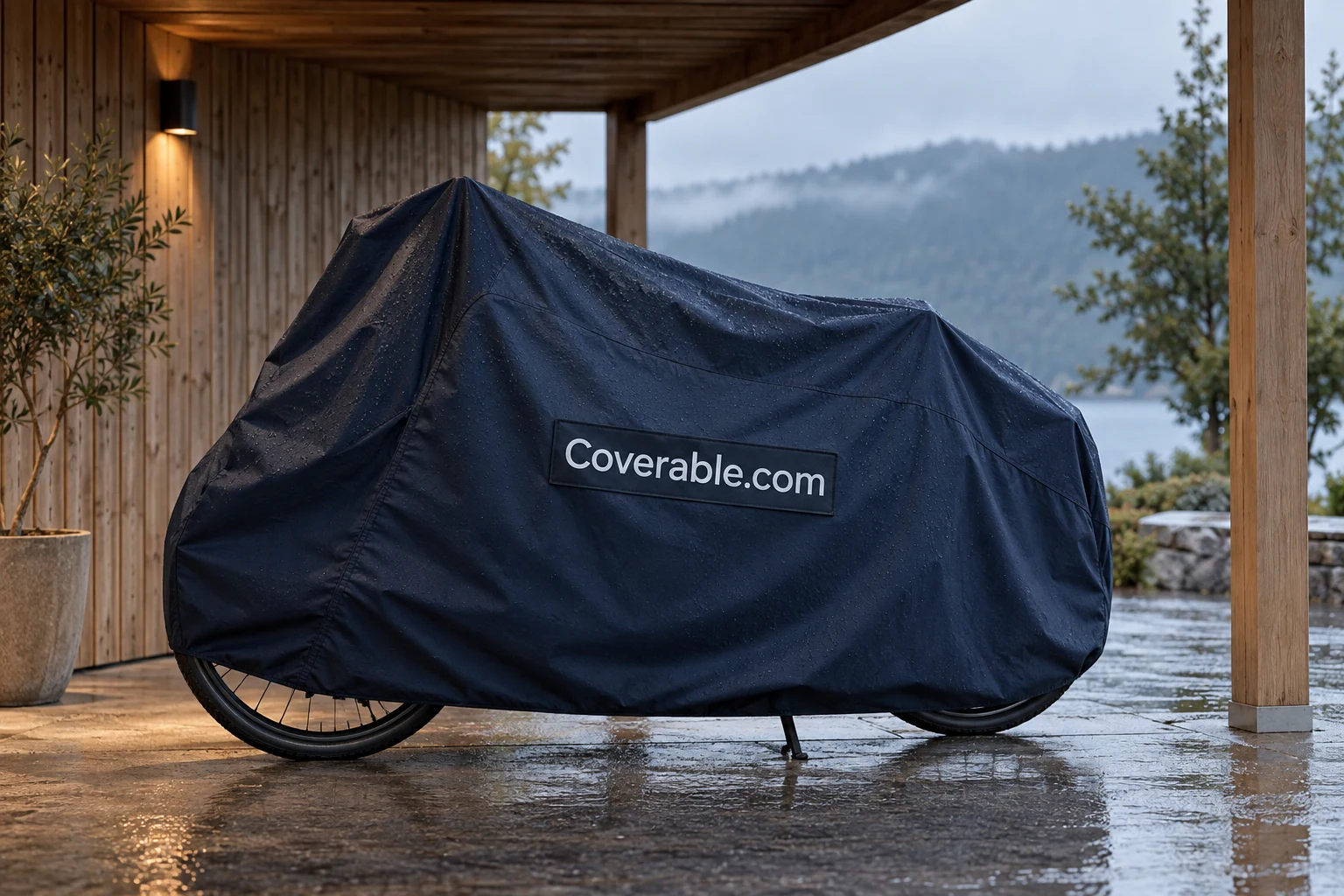
A cover is a practical purchase with an unusually visual question: will it fit the thing sitting in front of me? A protective goods brand under Coverable.com could build its offer around answering that question well. The name works naturally on packaging, a sewn label, a measurement guide, and an order confirmation. It gives a physical product range a direct home without limiting the business to one piece of equipment.
This is an illustrative retail concept. The strongest first range would probably be much smaller than the eventual ambition. Choose one category whose shapes, storage conditions, and customer questions the team can learn in detail. Outdoor chairs, workshop equipment, or travel cases each create a different sourcing and support problem. A narrow launch gives the business a chance to solve one of those problems properly.
Start with the object
Define the objects the first cover is meant to fit. List the dimensions that matter, the protrusions that change the shape, and the way the object is stored. A handle, folded arm, wheel, or sloping back may matter more than the largest number on a specification sheet. Photograph real examples from several angles before deciding how to present the range.
Manufacturer instructions provide useful reference points, but each product needs its own guidance. The Covers & All measurement guide uses category-specific diagrams with different measurement points for different shapes. That is a helpful reminder that a single width-by-height sketch may not explain every product. A new brand should develop and verify instructions for its own designs rather than borrowing another manufacturer's fit tolerances.
Ask suppliers which dimensions describe the finished cover and which describe the object it is designed to cover. Record any allowance explicitly. Customers should not have to guess whether to add extra space themselves. If a made-to-order item needs a photograph, explain the views required and provide a route to ask a question before placing an order.
Make material claims specific
The material story should come from documented specifications and testing relevant to the actual product. Terms such as water-resistant and waterproof should not be used as decorative synonyms. Seams, closures, ventilation, and the installed shape can affect the finished product's behavior. Ask the supplier what has been tested, under which conditions, and which claims apply to the complete cover.
A useful product page could show the fabric texture, fastening method, ventilation detail, and care label alongside the overall product. Each image should answer a different question. An attractive outdoor scene can establish the mood, but the buyer also needs to see how a strap closes and where the cover ends near the ground.
Care instructions should be approved for the material and construction. Avoid presenting one cleaning recipe as suitable for every fabric. Give the customer the relevant manufacturer's directions and explain where to find replacement information later. The FTC warranty guide is a starting point for reviewing any written warranty offered with a consumer product; actual terms deserve product-specific legal review.
A range a small team could learn
Imagine an illustrative first collection of three cover sizes for compact outdoor chairs. Each size has a measurement diagram, a set of example chair shapes, and a clear statement of the dimensions used. The team tests the guide with people who have never seen the product. If participants measure different points on the same chair, the diagram needs work before the range expands.
The pilot would also include putting the cover on and taking it off. Can a customer find the front? Is the fastening easy to reach? Where does the cover go while the chair is in use? A small storage pouch or a clearly placed label might be more useful than another lifestyle photograph. Those decisions should come from observation, not from adding features for a longer bullet list.
Returns and questions form part of the product research. Record the reason in the customer's own words, then classify it carefully. A fit problem may come from unclear measurements, a mislabeled variant, a manufacturing issue, or an unusual object shape. Combining all of those into one return-rate number hides the decision the team needs to make.
Distribution through useful guidance
One plausible route to customers is a category-specific fit guide that retailers, repair shops, or enthusiast communities can share. It should help someone measure their object even before they decide to buy. The commercial link is then natural: the range is designed around the same measurements the guide explains. Paid promotion can follow once the team knows the page helps customers choose correctly.
A retailer partnership could begin with one display item and a simple measuring card. Staff need to know where the product fits, where it does not, and how to handle an uncertain customer. Keep a record of the questions asked in store. Those questions can improve the online guide and reveal whether the range needs another size or simply a clearer explanation.
Coverable.com would suit an operator who wants to build a practical product brand with room to grow from one well-understood category. The long-term range could broaden, but the first release should earn confidence through fit information, accurate specifications, and service that helps buyers make a considered choice.
To explore acquiring the domain, send a purchase inquiry with a brief outline of the intended range. A partnership proposal should describe the product category, sourcing experience, and first distribution channel. The domain is available as a digital asset; any additional assets would be subject to a separate agreement.